Protect the physique: Ukraine volunteers craft armor, camouflage
Warning: Undefined variable $post_id in /home/webpages/lima-city/booktips/wordpress_de-2022-03-17-33f52d/wp-content/themes/fast-press/single.php on line 26
2022-05-09 09:16:18
#Defend #physique #Ukraine #volunteers #craft #armor #camouflage
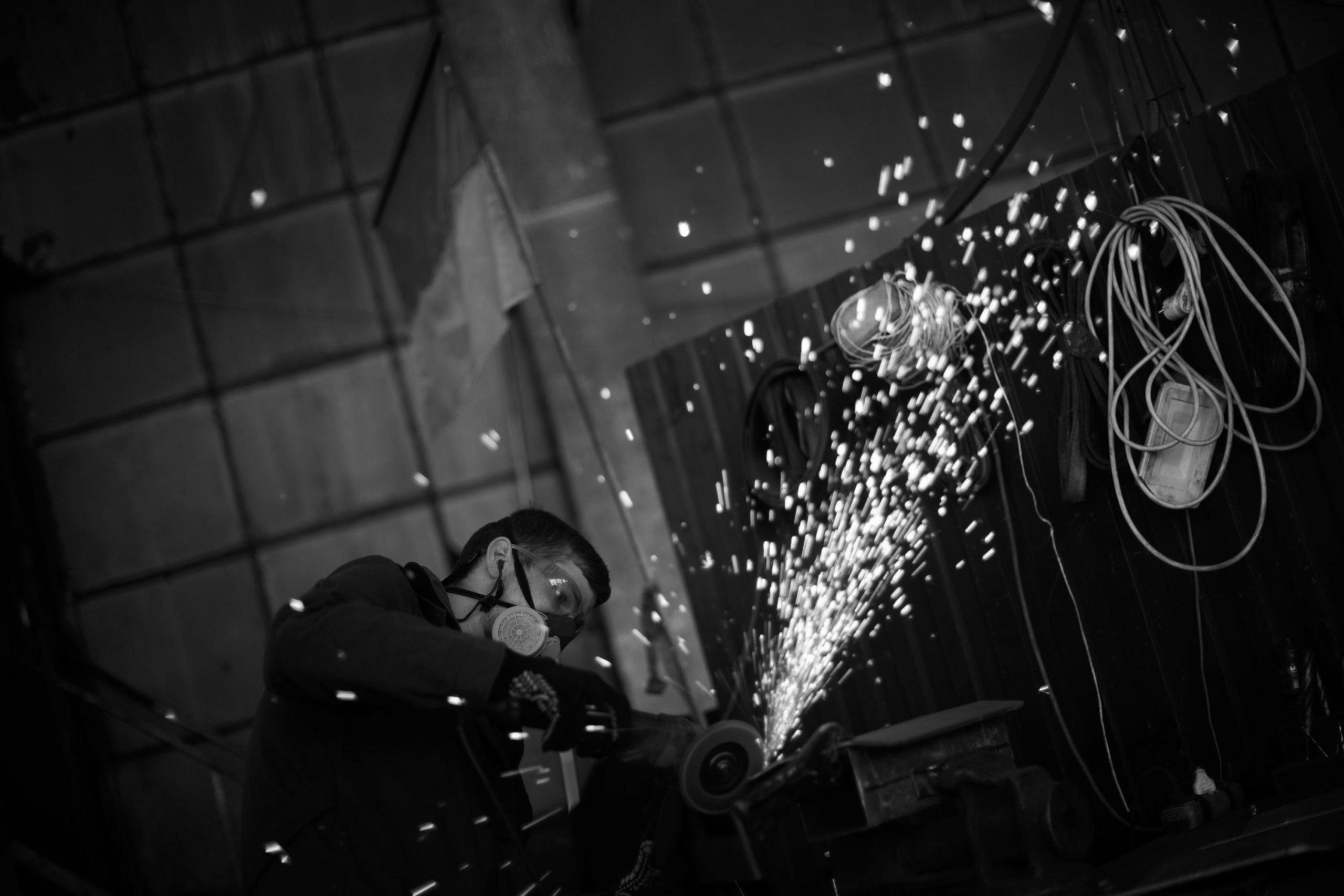
ZAPORIZHZHIA, Ukraine (AP) — Sparks fly as a circular noticed slices into steel, while welders nearby work feverishly to the sound of blaring heavy metal. Upstairs, stitching machines clatter as women mark patterns on material being shaped into bulletproof vests.
An old industrial complex in the southeastern Ukrainian riverside metropolis of Zaporizhzhia has develop into a hive of activity for volunteers producing everything from body armor and anti-tank obstacles to camouflage nets, portable heating stoves and rifle slings for Ukrainian soldiers fighting Russia’s invasion. One section specializes in vehicles, armor-plating some, converting others into ambulances. One other organizes food and medical deliveries.
With the front line about 50 kilometers (30 miles) from town, some sections of the operation, such as the stitching of bulletproof vests, are working around the clock in shifts to fulfill demand. Crowdfunding has introduced in sufficient money to purchase steel from Sweden, Finland and Belgium, which is lighter than local steel, organizers say, a crucial quality for body armor.
The operation is the brainchild of local celebrity Vasyl Busharov and his friend Hennadii Vovchenko, who ran a furniture-making business. They named it Palianytsia, a type of Ukrainian bread whose title many Ukrainians say can't be pronounced properly by Russians.
The operation relies completely on volunteers, who now quantity greater than 400 and are available from all walks of life, from tailors to craftsmen to lawyers. Other than these involved in manufacturing, there are additionally drivers delivering humanitarian aid and medical equipment bought by donated funds.
“I really feel I'm needed here,” said dressmaker Olena Grekova, 52, taking a brief break from marking cloth for vests.
When Russia invaded on Feb. 24, she was in Thailand seeking inspiration for her spring collection. Initially, she said, she puzzled whether or not it was an indication from God that she shouldn’t return. Her husband and two adult sons urged her not to.
“However I decided that I had to go back,” she stated.
She had recognized Busharov for years. Arriving home on March 3, she gathered her gear the next day and by March 5 was at Palianytsia. She’s been working there each day since, bar one, generally even at evening.
Shifting from designing backless ballgowns to creating useful bulletproof vests was “a new experience for me,” Grekova stated. However she sought suggestions from troopers for her designs, which have armor plates added. Now she is helping to provide a number of variations, including a prototype summer vest.
In one other part of the economic complicated, 55-year-old Ihor Prytula was busy making a new camouflage net, winding items of dyed cloth through a string frame. A furniture-maker by commerce, he joined Palianytsia at the start of the conflict. He had some army expertise, he said, so it was straightforward to get suggestions from soldiers on what they wanted.
“We converse the same language,” he said.
For Prytula, the struggle is private. His 27-year-old son was killed in late March as he helped evacuate individuals from the northern town of Chernihiv.
“The warfare and loss of life, it’s bad, trust me, I know this,” he stated. “It’s bad, it’s tears, it’s sorrow.”
The call for volunteers went out as soon because the conflict began. Busharov announced his undertaking on Facebook on Feb. 25. The next day, 50 people turned up. “Next day 150 individuals, next day 300 folks. ... And all collectively, we strive (to) protect our city.”
They started out making Molovov cocktails in case Russian troopers advanced on Zaporizhzhia. In 10 days, they produced 14,000, he stated. Then they turned to producing anti-tank obstacles referred to as hedgehogs — three giant steel beams soldered collectively at angles — used as part of town’s defenses. Quickly, Busharov and Vovchenko mentioned, they found another urgent need: there weren’t enough bulletproof vests for Ukraine’s troopers.
But studying the way to make one thing so specialised wasn’t straightforward.
“I wasn’t really linked with the military at all,” said Vovchenko. “It took two days and three sleepless nights to understand what needs to be achieved.”
The workforce went by way of varied sorts of steel, making plates and testing them to examine bullet penetration. Some didn’t provide enough safety, others were too heavy to be useful. Then they'd a breakthrough.
“It turns out that metal used for car suspension has excellent properties for bullet penetration,” Vovchenko mentioned, standing in front of four cabinets of test plates with various degrees of bullet damage. The one fabricated from automobile suspension steel showed dozens of bullet marks but none that penetrated.
The vests and every part else made at Palianytsia are offered free to troopers who request them, so long as they'll show they're within the navy. Every plate is numbered and every vest has a label noting it's not for sale.
Up to now, Palianytsia has produced 1,800 bulletproof vests in two months, Busharov said, including there was a ready record of around 2,000 more from throughout Ukraine.
Vovchenko stated they have heard about as much as 300 folks whose lives have been saved by the vests.
Understanding that's “extremely inspiring and it keeps us going,” he said.
____
Inna Varenytsia in Zaporizhzhia, Ukraine, contributed.
___
Observe all AP stories on the war in Ukraine at https://apnews.com/hub/russia-ukraine
Quelle: apnews.com