Coronavirus committee: Meat firms lied about impending shortage and put employees in danger
Warning: Undefined variable $post_id in /home/webpages/lima-city/booktips/wordpress_de-2022-03-17-33f52d/wp-content/themes/fast-press/single.php on line 26
2022-05-16 01:55:17
#Coronavirus #committee #Meat #companies #lied #impending #shortage #put #workers #threat
"The Select Subcommittee's investigation has revealed that former President Trump's political appointees at USDA collaborated with large meatpacking corporations to lead an Administration-wide effort to power staff to remain on the job in the course of the coronavirus crisis despite harmful circumstances, and even to prevent the imposition of commonsense mitigation measures," committee chairman, US Rep. James Clyburn, said in a statement Thursday.
The North American Meat Institute, an industry trade group, criticized the committee's report as "partisan" and mentioned it "distorts the truth in regards to the meat and poultry business's work to protect employees throughout the Covid-19 pandemic."
"The House Choose Committee has achieved the nation a disservice. The Committee could have tried to be taught what the trade did to stop the spread of Covid among meat and poultry employees, decreasing optimistic cases associated with the business while circumstances have been surging throughout the country. As a substitute, the Committee makes use of 20/20 hindsight and cherry picks data to assist a narrative that is completely unrepresentative of the early days of an unprecedented nationwide emergency," Julie Anna Potts, president and CEO of the North American Meat Institute, stated in a press release.
Ignoring the danger
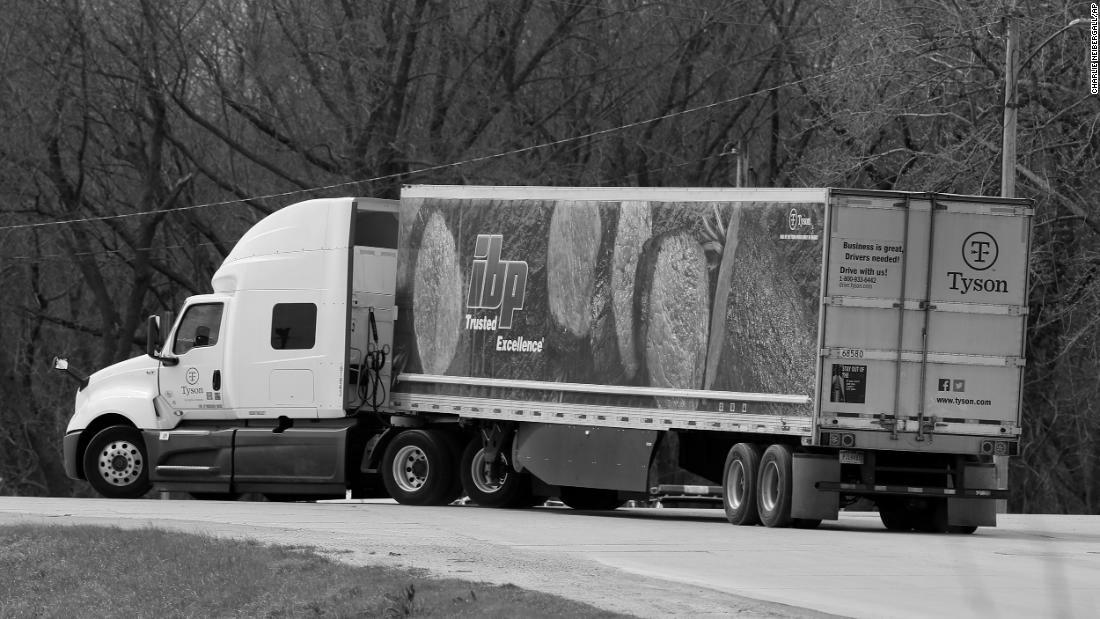
The investigation centered on meat producers Tyson (TSN), Smithfield, JBS USA, Cargill and Nationwide Beef together with the Occupational Safety and Well being Administration and its response to worker illnesses. Meat crops grew to become a hotbed for Covid outbreaks within the first year of the pandemic as employees grappled with long hours in crowded work spaces.The initial outcomes of the probe, released final October, confirmed infections and deaths among employees in crops owned by these 5 companies within the first yr of the pandemic have been considerably higher than beforehand estimated, with over 59,000 employees infected and at the least 269 deaths.The report cited examples, based on Internal meatpacking industry paperwork, of a minimum of one firm ignoring warnings by a physician of the chance of rapid transmission of the virus in their amenities.For example, the report found that a JBS government received an April 2020 e-mail from a doctor in a hospital close to JBS' Cactus, Texas, facility saying, "100% of all Covid-19 sufferers we've within the hospital are either direct workers or family member[s] of your staff." The physician warned: "Your workers will get sick and will die if this factory continues to be open."
The emails prompted Texas Governor Greg Abbott's chief of staff to reach out to JBS, but it surely remains unclear whether JBS ever responded to the email, the report said.
"This coordinated marketing campaign prioritized trade manufacturing over the health of employees and communities and contributed to tens of thousands of workers changing into unwell, a whole lot of staff dying, and the virus spreading throughout surrounding areas," mentioned Rep. Clyburn.
"The shameful conduct of company executives pursuing profit at any value throughout a crisis and authorities officials eager to do their bidding regardless of resulting harm to the public must never be repeated," he mentioned.
In a response to CNN's request for remark, JBS, in an e mail, did not deal with the medical doctors warning, highlighted by the committee.
"In 2020, as the world confronted the challenge of navigating Covid-19, many lessons had been learned, and the well being and security of our team members guided all our actions and choices. During that vital time, we did all the pieces potential to ensure the safety of our people who kept our critical meals provide chain working," said Nikki Richardson, a spokeswoman for JBS USA & Pilgrim's.
The investigation surfaced examples of some meatpacking industry executives acknowledging that being clear in regards to the lax mitigation measures and excessive infections charges in vegetation would trigger alarm.
The report, citing an organization electronic mail, stated on April 7, 2020, managers at National Beef mentioned avoiding explicitly notifying employees when an contaminated plant worker returned to work with doctor clearance, saying they should as an alternative "announce line meeting fashion," doubtless referring to bulletins made during casual in-person huddles of production line employees, "hoping it does not incite further panic."
Meatpacking corporations and america Department of Agriculture "jointly lobbied the White Home to dissuade employees from staying house or quitting," in line with the report.
Further, meatpacking corporations efficiently lobbied USDA officers to advocate for Division of Labor insurance policies that disadvantaged their workers of advantages in the event that they selected to remain dwelling or stop, while also seeking insulation from legal liability if their staff fell ailing or died on the job, in keeping with the report.
The probe discovered that in April 2020, the CEOs of JBS, Smithfield, Tyson and other meatpacking firms asked Trump cupboard member and then Secretary of Agriculture Sonny Perdue to "elevate the need for messaging in regards to the importance of our workforce staying at work to the POTUS or VP degree," and to clarify that "being afraid of Covid-19 just isn't a reason to give up your job and you are not eligible for unemployment compensation in the event you do."
On April 28th, 2020, President Trump signed an government order directing meat packing crops to observe guidance being issued by the CDC and OSHA on easy methods to hold workers secure, so processing vegetation might keep open
Sec. Perdue would later ship a letter to governors and to the leaders of meat processing corporations."Meat processing amenities are vital infrastructure and are important to the national safety of our nation. Protecting these amenities operational is crucial to the meals provide chain and we expect our partners across the nation to work with us on this concern."
The Committee report mentioned meatpacking firms and lobbyists worked with USDA and the White House in an attempt to stop state and local well being departments from regulating coronavirus precautions in crops.
Calling the contents of the report deeply disturbling, a spokesperson for the USDA stated "lots of the selections made by the previous administration aren't according to our values. This administration is dedicated to food security, the viability of the meat and poultry sector and dealing with our partners across the federal government to protect workers and ensure their health and security is given the precedence it deserves."
A spokesman for Perdue, who's at present Chancellor of the University of Georgia, said Perdue "is targeted on his new position serving the scholars of Georgia" and didn't provide a touch upon the committee report.
Former President Trump has not responded to CNN Business' request for remark.
False claims of impending meat scarcity
As their employees fell sick with the virus, a number of meat suppliers had been compelled to briefly shut vegetation in 2020 and their corporations' executives warned the scenario would put the US meat provide in danger.The report slammed those warnings as "flimsy if not outright false."
"Just three days after Smithfield CEO Ken Sullivan publicly warned that the closure of a Smithfield plant was 'pushing our country perilously near the edge when it comes to our nation's meat provide," he asked business representatives to issue a press release that 'there was plenty of meat, sufficient . . . to export," whereas Smithfield advised meat importers the same, the report mentioned.
The investigation discovered industry representatives thought Smithfield's statements a few meat provide crunch were "deliberately scaring individuals."
At the time, meals specialists informed CNN Enterprise that while there were meat shortages, at occasions, varied cuts of meat might not be obtainable.
Tyson mentioned via an e mail response that it was reviewing the report.
Smithfield stated it took "every acceptable measure to keep our employees secure" when it encountered a "first-of-its-kind problem" two years in the past.
"So far, we've got invested more than $900 million to help employee security, including paying staff to remain residence, and have exceeded CDC and OSHA guidelines," Smithfield spokesman Jim Monroe, stated in an e-mail to CNN Business.
"The meat production system is a contemporary wonder, but it's not one that may be re-directed on the flip of a swap. That's the problem we faced as restaurants closed, consumption patterns changed and hogs backed-up on farms with nowhere to go. The concerns we expressed had been very real and we are thankful that a true food crisis was averted and that we're beginning to return to regular.... Did we make each effort to share with government officials our perspective on the pandemic and how it was impacting the meals manufacturing system? Absolutely," he said.
Cargill and Nationwide Beef couldn't instantly be reached for remark.
"At present's report confirms what we already knew -- the Trump Administration's negligence and unethical actions endangered America's meatpacking staff and their families on the peak of the pandemic," the United Meals and Commercial Workers Worldwide Union mentioned in a statement.
UFCW, which represents greater than 250,000 staff in meatpacking crops, said the findings indicate a "desperate need of a comprehensive meat processing security bill."
"As a union that represents the largest share of America's meatpacking staff....we're fully committed to ensuring that meatpacking jobs embrace the well being and safety requirements these skilled employees deserve and call on all lawmakers to immediately take steps to make that occur."
The committee mentioned its report was based mostly on greater than 151,000 pages of documents collected from meatpacking corporations and curiosity groups, calls with meatpacking employees, union representatives, and former USDA and OSHA officers, among others.
-- CNN Business' Jennifer Korn contributed to this report
Quelle: www.cnn.com